Showing posts with label torii. Show all posts

Monday, April 12, 2010

Modern Myths: Inari

I once commented that there was something organic about the Japanese practice of erecting Torii Gates in naturally sacrosanct places among nature. I noted that I thought I’d seen similar gates growing out of trees in various wondrous natural places in Canada. But I never put two and two together: that Torii gates must, too, grow naturally somewhere in Japan like trees, and they would have to be transplanted to their final destinations.


There is a thing of wonder that exists in the burbs of Kyoto, the Japanese Holy Land that has been home to wonders for more than 1100 years. It is a large hillock to the southeast of Kyoto Eki: a mountain shrine that has become more shrine than mountain. They call it Inari, and it is home to one of the rarest species of tree in Japan:

The Torii.

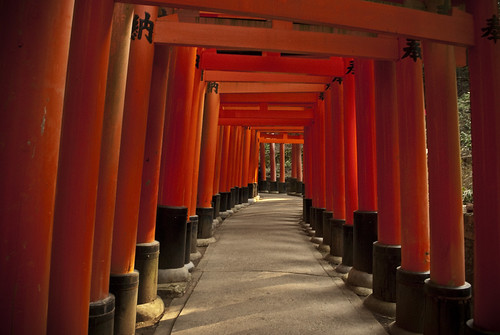
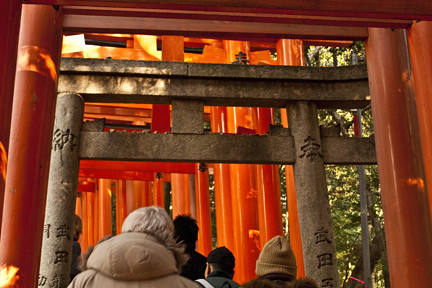
Yes, it is at Inari that Torii gates are grown for Shinto shrines all over Japan. A close inspection of the vermillion gates in your town may lead you to believe that they are, in fact, built and not grown, but a visit to Inari would show you otherwise. For the Torii grow thick like a wood across the surface of the mount, snaking rows of them running from base to summit. So dense and well-ensconced are they that one can no longer determine whether the trails up the mountain came first, as planting paths for the Torii, or whether the Torii were always here, and the paths were laid out as dictated by the spaces between their twin trunks.

From sproutling to sapling to shrine gate, you can watch the life cycle of the Torii at Inari. Where mature gates have been harvested and transplanted to their shrines elsewhere in Japan, the fertile soil at their stumps already seeds their tiny successors.
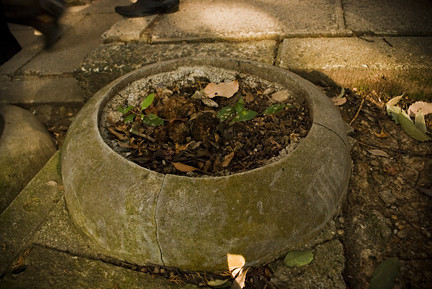
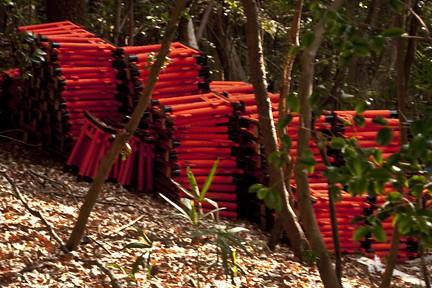
In wooded glens just off the beaten trails, Torii saplings sit stacked, waiting to be moved to the secret nurseries on the mountain’s back side.
In a few, rare places among the growing, living Torii, there are also Torii of stone that cross the paths. They are far older than the vermillion forest at Inari, and their mysteries are deeper still. They could well have been the first Torii: their histories stretching back to a time immemorial, when Gods descended on mountain tops and rock was as alive as wood.
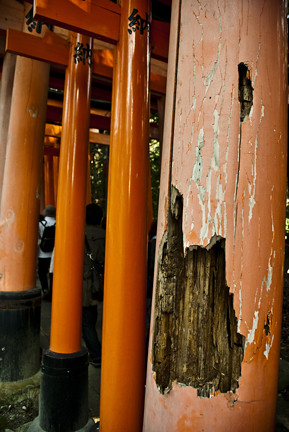
The Torii Wood at Inari will not last forever, though. It is a creature of myth like the dodo or the dragon or the Douglas fir. It requires faith to exist, and as the mountain shrine becomes more tourist trap than sacred site, the Toriis are beset by the first signs of disease, of rot.
It becomes harder and harder to grow new Toriis here, and every year more shrines across Japan resort to steel or timber facsimiles of the living shrine gates as their orders to Inari go unfilled.

Friday, October 09, 2009

Torii Gates

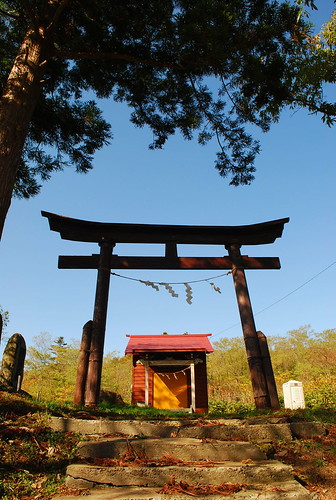
As Will Ferguson touched on in his note on the Shinto religion, the Japanese mark the entrances to their holy sites with big, red, pi-looking things called Torii Gates. When one crosses the threshold of the gate, he knows that he’s stepping into the territory of a particular spirit or deity. Initially, I wondered if the sacredness might not be artificial when these bright red structures are slapped up in front of small shrines to worship river gods or spirits of the forest. I pictured them as somewhat overdramatic “DEITY APPROVED!” stamps, where the holiness of the site was derived from the Tori Gate alone, and without it there would be little of any great import to that particular place.

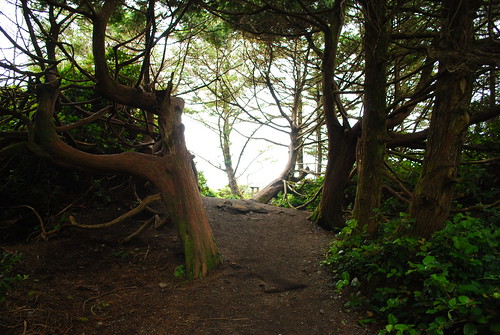
But in my recent trip out west to BC, I feel like I came upon some understanding of the Torii Gate. Ironic, that: coming to understand Torii Gates in Canada. Regardless, as I was rambling through the woods and up the sides of mountains, I would often chance upon things that looked remarkably like the Gates. It would be two trees of roughly the same size, growing more or less abreast with an arm span between them. The worn paths we were following would run between them, beneath boughs that swept together like a truss over our heads, and often I wondered if, perhaps, a coyote lay concealed in the brush to one side, and a cougar in the brush on the other: the north american ahh and nn.

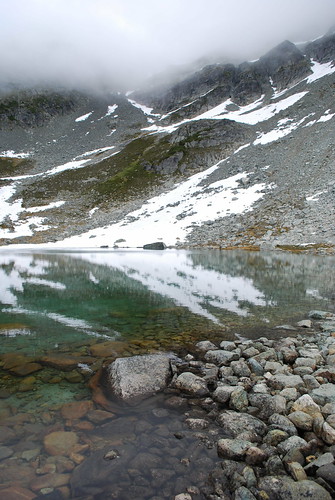
On the sparsely forested upper slopes of Blackcomb, I caught one natural gate that split light and dark at the edge of a stand of stunted trees. As we were passing back through it from the lakeside loop, I felt I should pay tribute in some way for the beauty we’d witnessed behind us.

Along the black, rocky shores of Ucluelet on Vancouver Island’s west coast, I came upon another natural gate that opened up on a seaside lookout. The grey, ocean-tossed view beyond of the Broken Group of islands and the area once known as the Graveyard of the Pacific inspired a reverence in me and lent a degree of proof to the idea that the trees with out-swept boughs we had just past through were meant to mark this place.

So perhaps I was wrong at my initial thought: that Torii Gates are divine salience artificially foisted upon the inane—a roadside attraction plopped down in an unimportant stretch of land to lend it import. Perhaps the idea and the design of the Torii Gates was once inspired by natural thresholds between the quotidian and the magnificent. And now, when these gates are built by man, they are just a frame, erected in front of a particularly special stretch of nature where someone was once inspired and they thought that you might be, too. The Gates are a “hey! Lookit that!” to pull us out of the hectic pace of our lives momentarily and cause us to take the time to really see something and catch the wonder in it.