It's been a dog's age...again, but I haven't exactly been idle. Two weekends back, Mark Mowbray, Mark Rostrup, Lindsay, and I returned to Rishiri, determined to finally summit the mountain we first attempted to climb in our first September here. It was tough going, but we made it, and there's more of a story to it, but for the sake of expedience, I give you the first cut of our Rishiri Adventure, accompanied by the wonderful Johnny Flynn from his album A Larum:

Showing posts with label climbs. Show all posts
Showing posts with label climbs. Show all posts
Monday, July 04, 2011

Monday, April 11, 2011
At the Top of Hokkaido
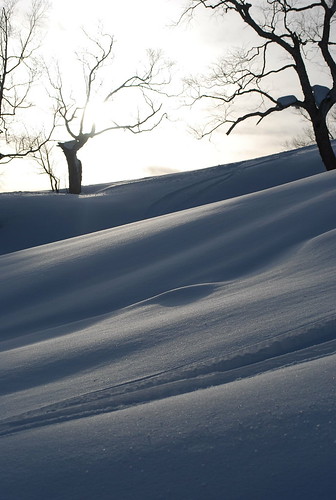
Mark, Lindsay, Max, and I spent this past weekend at the top of Hokkaido, snowboarding (and skiing, I guess, as Max was there) on Asahidake, the tallest mountain in Hokkaido.
Thursday, September 09, 2010
The Yotei-zan Climb

Despite numerous people having cautioning me that Yotei, as a mountain, was hard and steep and tall, I underestimated it a bit. I based my expectations on Rishiri from last fall: a mountain that we hiked a month later, several hundred kilometers further to the north, and which we never actually summited because we were losing light.
In short, though both were sunny and glorious, they were very different climbs.

Mark, Lindsay, Perry and I all met up at Kutchan station at 9:30 on Saturday morning, picked up some food and drink, and then drove over to the Makkari trail head to start our climb at about 10:30.


We broke for lunch at about 1pm at the Fourth Station, which was at an elevation of 930 meters and, I reasoned, about half way up the 1898 meters of Yotei.

However, it only got steeper from there, making Fourth Station feel like it was only a third of the way up the mountain.


The weather was utterly glorious--pretty much perfect--which meant that there was LOTS of sun to make the exertion of the climb EVEN SWEATIER. My current Japananotebook, which had been packed into the pocket closest to my sweaty, sweaty back was irreversibly scarred by the experience and needed a day or two to fully dry out.


That being said, all of the exhaustion and water rationing were definitely worth it:


(that's meant to be a panorama, but the blog munches it. Best to click it and check it out on Flickr proper.)
We reached our destination, the Yotei mountain hut or Yotei hikers cabin (I'm not sure what it's actually called) above ninth station somewhere around 4:30pm. This was where we were planning to spend Saturday night. It's the only building on the mountain, and for the very cheap 900円 you can have a blanket and a piece of floor to sleep on at an elevation of something like 1600 meters. All four of us bunked on the second floor of the cabin, along with 20-30 other Japanese folks. Mark had been told that the two floors of the cabin could hold as many as 100 people, but, having seen the cabin, that number seemed like the product of optimistic creativity. I would have guessed 75 souls at a tight squeeze.
Such fanciful capacities would also have to worry about overflowing the long-drop toilets provided in the cabin. You were meant to click the counters hanging on the walls to give the cabin manager an idea of how full the tanks were getting (0ne click for Number 1, two clicks for Number 2), but a quick peek into the squatters to see how short the drop was getting told me that there weren't many clicks left in the tanks. The whole thing was presided over by one fat old fly who would lazily hover up out of the toilet when you lifted the lid. He'd buzz annoyingly around your head while you did your business, like a particularly malicious and disease-ridden washroom attendant, only to return to his moist, warm cave when you closed the lid on it once again.


Despite the facilities and the lack of drinking water for anything other than emergencies, the mountain cabin was fantastic--particularly when we got to eat our modest dinners (dried sausage, onigiri, soyjoy bars, caloriemate, and an apple for me) outside on a slapped-together picnic table, overlooking the most ridiculous, clouded-over setting sun.


Once the sun had gone down, the mist had rolled up, and a chill was starting to set in on the shoulders of Yotei, we headed inside and made a poor attempt at playing the world's highest game of Settlers of Catan by headlamp light (the board of which was another of my sweat-damaged items).

However, we all joined the chorus of snorers around us before it had gotten much later than 7pm. Between the blanket-padded floor, our rudimentary pillows, and the ever-changing collection of night ruminations around us (seriously. I heard more types of snores in that one night than I have in my lifetime. I should have been recording them), the sleep that came was fitful, and it wasn't long before my alarm was going off at 4am, beckoning us to start our climb to the peak for sunrise.


We achieved the peak somewhere around 5:30am on Sunday, but, sadly, there wasn't much to see:


Friday, September 03, 2010
Destination: Yotei-zan
This weekend, Mark, Lindsay, possibly Perry, and I are finally going to get off our collective butts and climb one of the prettiest mountain in this place: Mount Yotei.

An active volcano (well, not since like 1050BC) with its crater rim at an elevation of nearly 1900m, Yotei is sometimes referred to as "Ezo Fuji," or "Hokkaido Fuji" due to the way that its conical shape mimics the iconic image of much larger Mount Fuji down in Honshu. Yotei has been staring us in the face all winter as we boarded on neighbouring Niseko An'nupuri, and its shape was clear on the horizon both when we all climbed Sapporo Dake in May, and when I climbed Shakotan Dake with my boss in June.


Long story short: It's about effing time we got up that mountain. We're planning to make the ascent using the Makkari course on Saturday morning, stay the night in a mountain hut at the summit, then come down on the Sunday in time to make the town festival in Makkari.
Wish us luck...particularly now that I've learned that Hokkaido may be expecting a typhoon this weekend!

Sunday, June 13, 2010
Up on Shakotan Dake
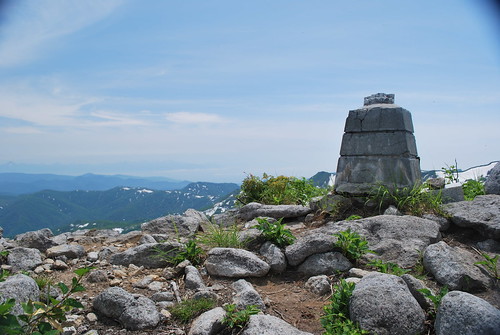
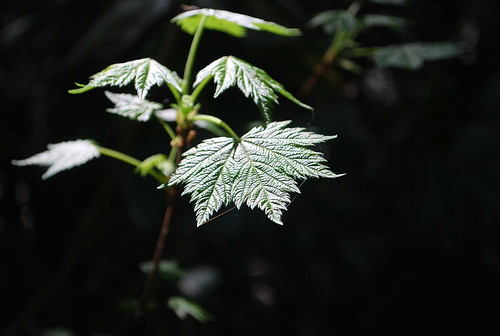
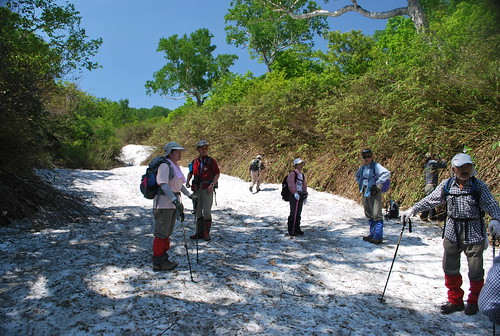
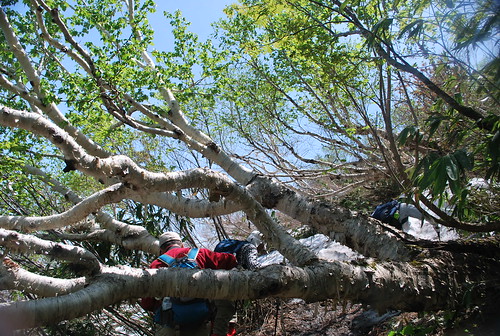
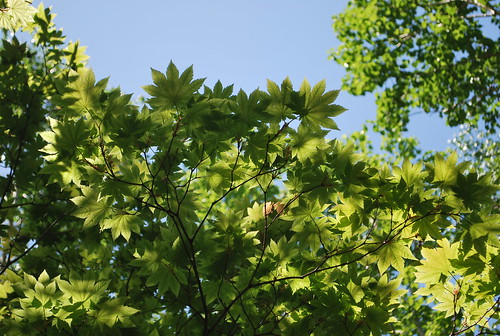
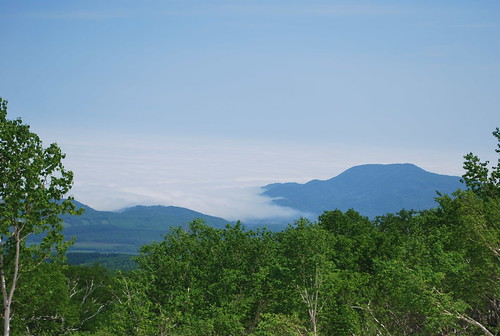
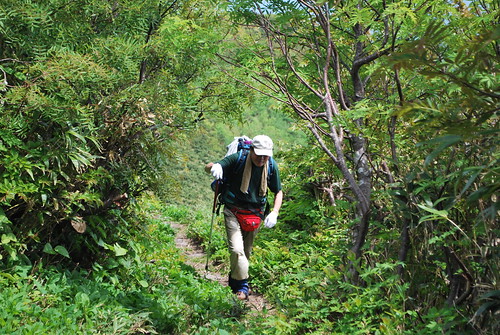
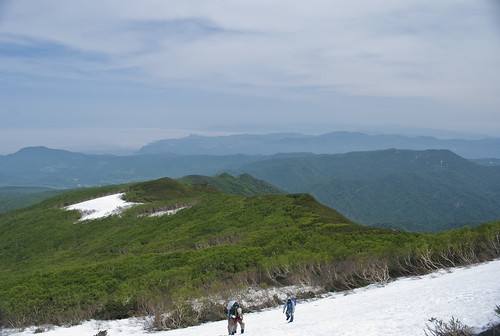
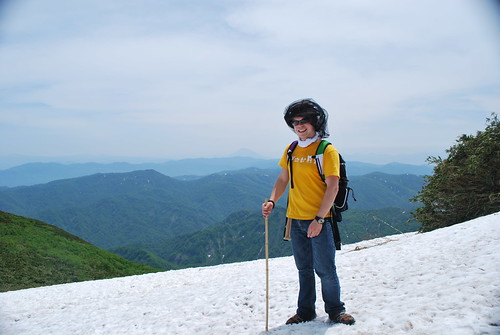
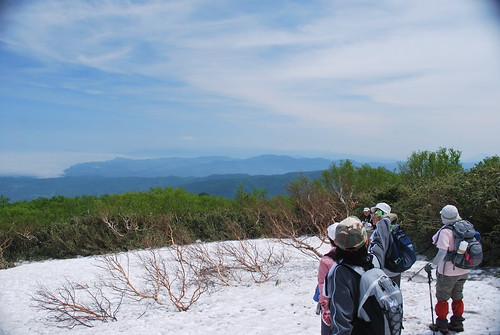
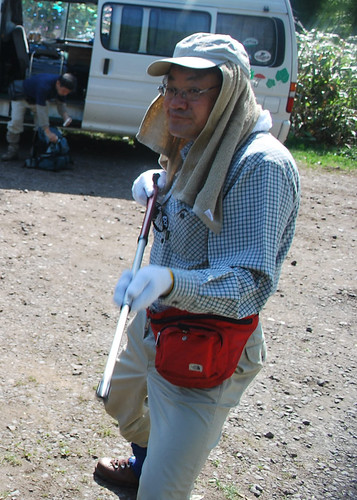
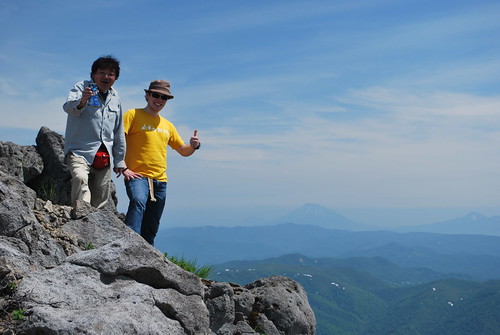
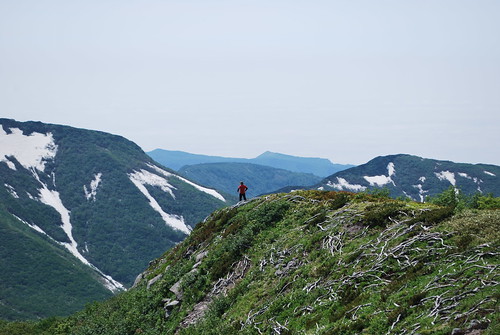
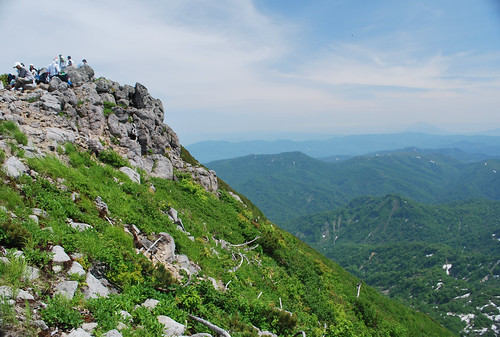
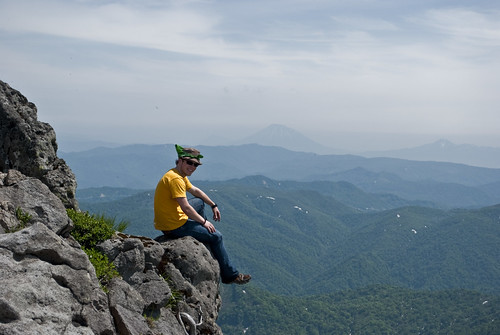
Today I climbed a mountain with my boss and a band of aging Japanese mountaineers. I'd been wanting to climb this particular mountain, which I can almost see from my house, since very soon after I arrived. In his continuing tradition of taking me on interesting adventures, my boss arranged the whole thing with a local climbing/hiking group, and we set out at 7:30 on Sunday morning. The weather couldn't have been better, and we were able to make it up in 4 hours, take about an hour for lunch at the top, then back down in 2 hours. Here's a cross section of the kinds of things you run into on a mountain:
Climbing Shakotan Dake with Jicho, I knock a staccato rhythm on the rocks with my bamboo cane as I cross. But it sounds a little more hollow than I’d hope: like there might be caves down there hiding Tanuki or Tengu.
At altitude, birch trees grow low and twisty like mangroves, more horizontal sprawl than towering pillar. Looking down on the world from on high gives vertigo impressions of concavity, of the earth curling up beneath you, and you out over it, until you might just be able to glimpse the unders of rocks.
From up there, where we break for lunch on the peak, we glimpse the standard hallmarks: the now-old friends: Yotei, Niseko An’nupuri. The near-centenarians in our group prove hardier and more versatile than I: cracking beers and lighting tiny gas stoves to cook themselves sumptuous summit suppers. I gulp down water for the heat and onsetting headache, and I dine on the lembas bread of the Japanese: Onigiri. Rice balls wrapped in seaweed with protein-packed, fishy cores.
Up here: still snow, but there’s a change of scene in the green. The Hills of Hokkaido, more Amazon or Andes, and not the Japanese Northern Outpost. No longer the birthplace of winter.
From up on Shakotan Dake, Furubira behind us is barely visible. The elevated plain could be an island in the sky, for at its cliff edges the low-lying coast is overlaid with kiri: low-lying mist that sits like clouds. Throughout the day, it recedes slightly, and we can catch sight of our town, of neighbouring Bikuni. However, by the time we shamble back down the mountain, sweaty and spent, and drive back down to the coast, the kiri is as thick and grey as ever, and it shrouds us in on our way to the onsen.

Monday, May 24, 2010
Victoria Day on Sapporo Dake
This has failed to synergize into the thing I wanted it to be, so I'm giving up on agonizing and am retconning it back to the date it happened. It's mostly a lot of blah blah blah, but there is a little bit of it that worked in the middle-ish, and I'll highlight that bit.
Some friends and I spent our Victoria Day weekend in a cabin with beer. Completely as it should be.
The cabin was in Japan, which was a little unorthodox for Victoria Day, and I only brought two cans of beer instead of the usual 24 as I didn’t feel like dragging copious amounts of booze half way up a mountain. Also, there were a large number of Russians, which is definitely a new addition.
But the core elements were still there: Friends, Cabins, Beer.
Heather had tracked down a hike run by our buddy Leon over at Hokkaido Adventures (who we last saw when he helped us brave an icy hurricane back in February). It was a two-day climb of Sapporo Dake with the Saturday night spent in a mountain cabin.
The hike up to the cabin was the very image of late spring. Leon had appointed me to walk at the head of our group. He’d instructed me to break any time we came to a river crossing as even this late in the season the river could still be frozen over, and he wanted to check the crossings before we attempted them. However, crossing after crossing was completely free of any signs of winter, save the rushing water of its end. The downward regions of the mountain were as if out of a fairy tale, with green, flowery growth off in the woods and the path itself sporting unbroken runners of green clovery leaves to frame the well-trodden brown. There were shaded rooms of ranked tree columns and ghibli-esque rocky rapids. There was the soft forest carpets, and there was the sucking mud. Despite Leon’s advice before the hike to be ready for snow, We didn’t reach any until late in the day on Saturday, just below the cabin. And, as if it were sitting right on some icy terminator line, it was only beyond the cabin that the river was still iced and snowed over.
The cabin itself was a rather ridiculously magical place. The downstairs was all yellow lantern light, warm woodsmoke, and the sentient, lazy clouds puffing out of the hookah. Heather commented on how that downstairs rang with a babel of voices, describing
“the wonder of being in a room with people who spoke English, French, Spanish, Arabic, Russian, Japanese, Cantonese and Korean. The feeling of having my London back – of Russian Koreans and Australian Russians talking Japanese and smoking shisha, whilst a Columbian taught a Californian how to salsa dance, and people from five different countries played snap together, over a discussion of halal meat, and with the background of a half-Maori talking about losing a language, and its politically expedient reclamation, half way around the world.”
The upstairs was two elevated rows of tatami mats under the exposed wooden rafters, our large camping packs standing at the heads of our bedrolls and sleeping bags like mountainous claim stakes. There was the toilet: a standard eastern squat number with one of the longest drops I’d ever seen: the used toilet paper disposed of in an artfully Japanese way involving individual origami waste boxes folded out of flyers. Our running water was also our refrigerator: an icy mountain stream channeled thorough a pipe into a small collecting pool. Its one end was a flotilla of beer cans and booze bottles, and the other the source from which we filtered and ladled our drinking and cooking water. At the cabin’s center was a large metal woodstove, and we’d remove circular pieces of it that resembled fiery manhole covers to nest the colossal cast iron kettle used for boiling water directly over the fires below. It was from this woodstove that Leon fed us rice and curry and raamen, and the heat he didn’t use would drift up into the sleeping floor through the almost decorative latticework of wood that was the vent in the ceiling. And when I lazily (and full-ly, and somewhat drunkenly) fell asleep on Saturday night, it was to the smell of this woodsmoke up in the rafters and the sound of the river’s neverending rush as it broke around the island on which the cabin stood.
Sunday was as glorious as Saturday before it—the perfect day to achieve Sapporo Dake’s peak before heading back down. We left the cabin later than intended, and we left all of our packs inside with the intent of retrieving them on our way back down from the peak. Leon had intended to lead us most of the way up to the peak on the frozen river, but one Japanese climber after another stopped in at the cabin as we were preparing to leave and cautioned us that today was the day the river would really start to melt, and to climb on it would be foolhardy. The stubborn Bush Pig eventually seemed to yield to the pressure, taking us, instead, up a trail just behind the mountain’s spring. I call it a trail, but a better word for it would be a stair. Between rocks and roots, it switchbacked up the mountain, vertically gaining remarkably quickly and looking like nothing so much as a set piece from the Lord of the Rings: a naturally disguised ladder.
On it, we climbed quickly up to the mostly unbroken fields of hard packed snow (the white stuff at the lower altitudes was mostly clinging about the river valleys). There was the white underfoot, and there was the white extending up the trunks of the birch that seemed to be the only species of tree not hampered by vertigo. All of this was capped with uninterrupted blue. There was the occasional place where one of us would break through and sink in snow up to our thighs, but, for the most part, the snow that remained this late in the season, this high up, was solid stuff where there was no need for snowshoes.
At the very peak of Sapporo Dake, the snow yielded to rock and dirt and scrub, as if this highest point was getting too close to the ever-approaching sun. But, looking out from that height, it would be easy to dream that sun was further off than we knew it to be. Looking north and east, towards Sapporo, the foothills of Sapporo Dake were lush and green, in full spring. However, to the south and west we were afforded expansive views of the ranges beyond, all of them seeming more white than green. In the distance, among the clouds, we picked out Niseko and Yotei like old friends, Leon pointing out other mountains near Toya still sleepy under snowcaps.
The first bit of the climb down from that summit wasn't much of a climb. On the way up, Leon had sighted a gully across the way from the stair we’d been climbing, and he intended to expedite our descent by having us slide down this steep slope on the snow that extended all the way down to that precariously frozen river. All he gave us for control was sticks, and all he gave us for direction was “mind the trees,” and one after another we threw ourselves down that hill, catching such speeds that I lost my hat on the way down; such speeds that Mark pulled an airborne, horizontal, pirouette-type maneuver to avoid an exposed root ball at the last minute. The walk back to the cabin from the base of the hill was similarly speedy once we realized that we were walking on that river everyone had warned us away from: the danger of it becoming real at points where we’d clamber down on a thin ladder of tramped snow and ice immediately beside a rushing waterfall.
Wednesday, September 30, 2009
Two Points Tour of Hokkaido
Note: I'm retconning this one as it really SHOULD HAVE been posted in September, closer to the end of our epic road trip
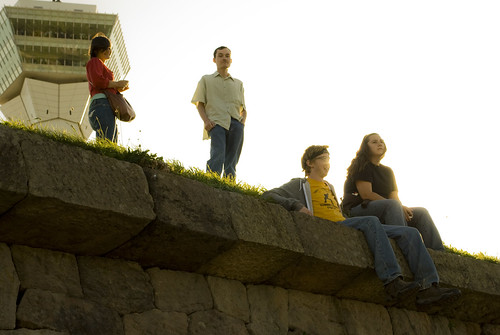
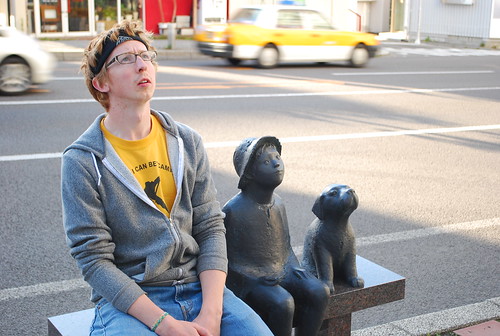
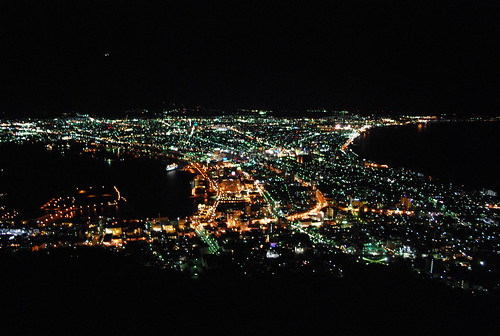
Well, our Two Points Tour has come and gone, and despite whatever hang-ups we ran into, it all kind of figured itself out in the end. A huge, epic, fluid tour it was not, and it more resembled a bit of a haphazard run from the south to the north of Hokkaido, but I fully believe some old, smiling, Japanese Fox God wanted it to happen. I say that because the whole thing involved a good deal of luck.
The luck of David driving down to the Southwest JET camping party in Onuma Koen, then on to Hakodate, and him offering us all a ride down to both.
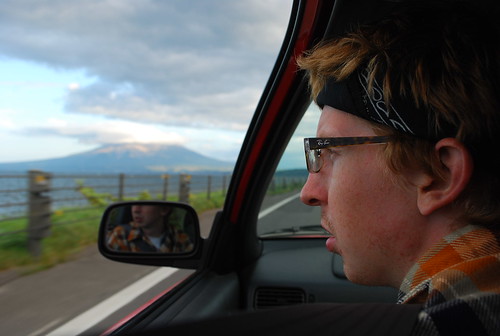
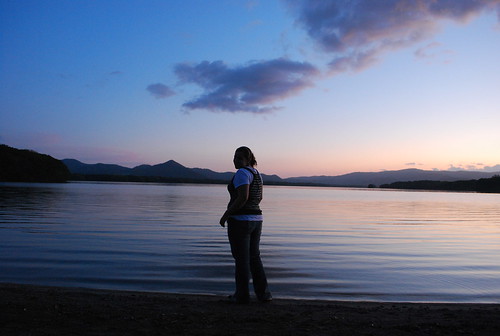
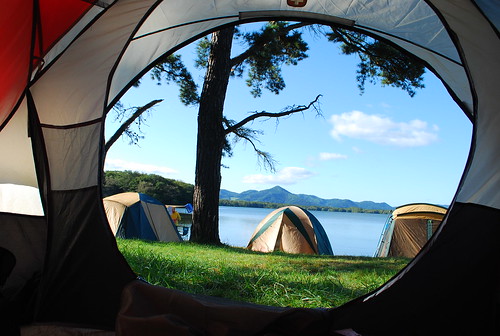
The luck of having Wesley the JET put us up in Hakodate and show us around for free, and the luck of having two random Japanese ladies lead us through a labyrinth warren of closed onsen (Japanese hotspring spa) hotels to the one that was still open in the middle of the night—that one onsen that was little more than a large bathtub in a back room and that may go on as the hottest bloody onsen I’ve ever been in.
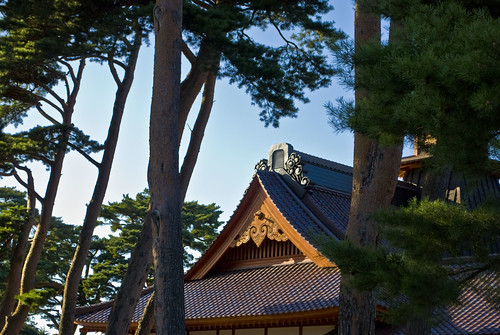

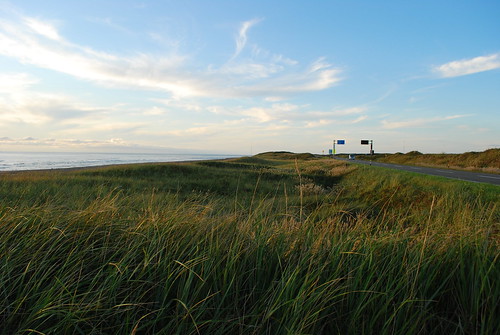
The luck of us hitting the broad, flat areas of Hokkaido—with its sandy beaches and grasslands that harkened to the Canadian prairies—just as the conical, once-volcano island of Rishiri lay off our left shoulders and the sun was setting over it.

The luck of blindly booking a youth hostel in Wakkanai for a night, only to arrive and discover that our room was a private suite with an impressive view of the town below.
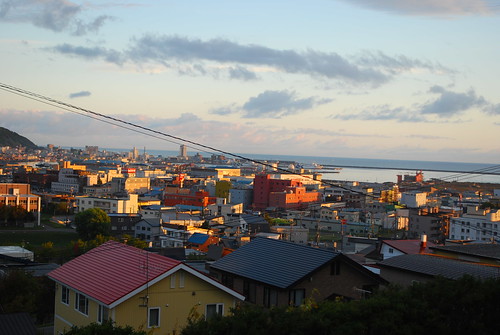
The luck of making it up Rishiri mountain, and then making it back down to the road just as the sun dipped below the horizon and made the wooded trails we’d been walking impassible.
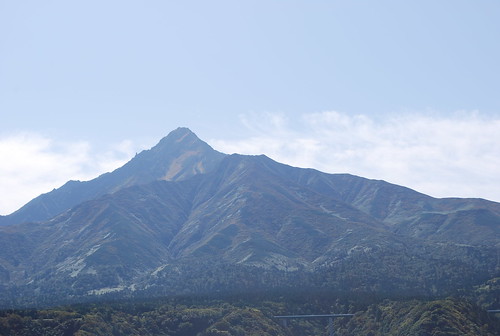
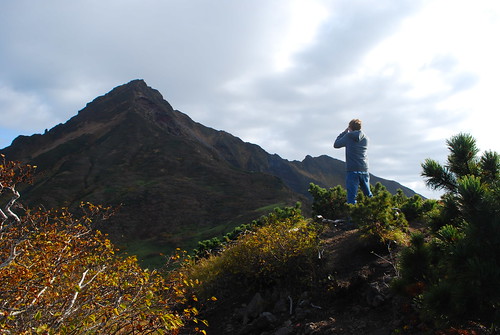
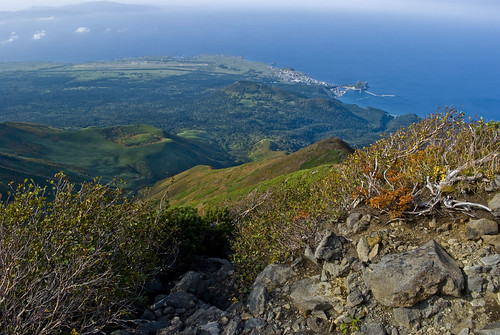
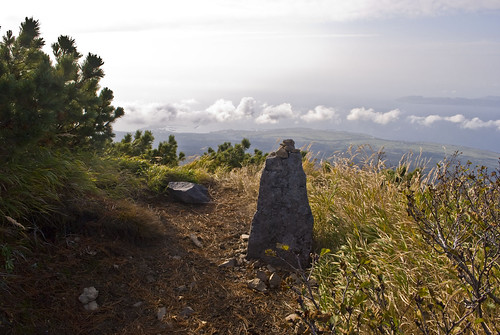
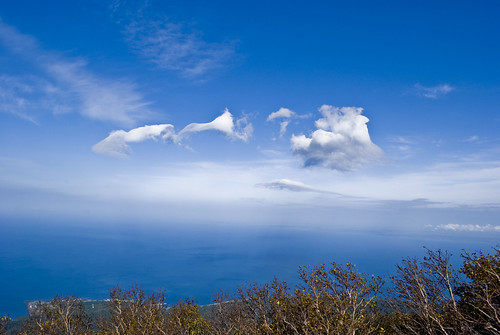
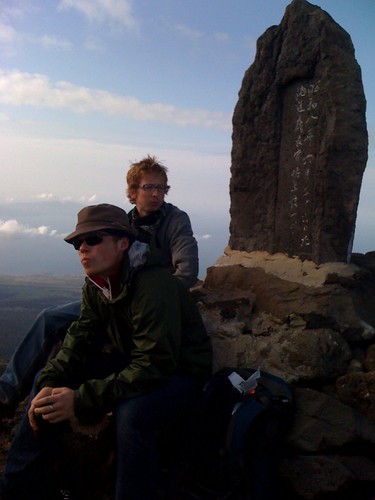
The luck of arbitrarily picking the campsite on Rishiri island that was across the street from a phenomenal onsen spa and restaurant.
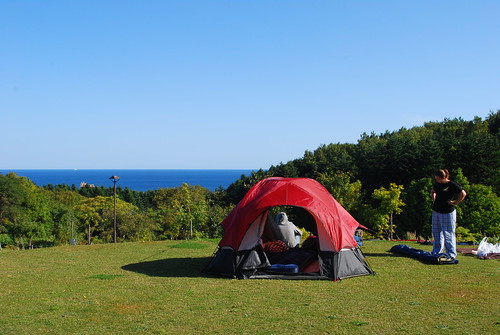
The luck of catching a perfect sunset off our right shoulders over the Sea of Japan just before we rolled into Tomamae on the last day of our road trip.

And, on that same day, the luck of, once again, blindly booking into a palace in Tomamae, complete with onsen, full-course Japanese meal, and a bloody treehouse bedroom in our beautiful, seaside lookout suite.
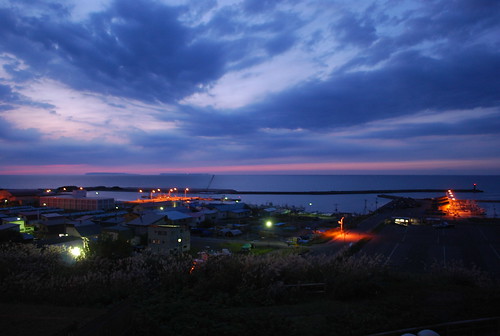
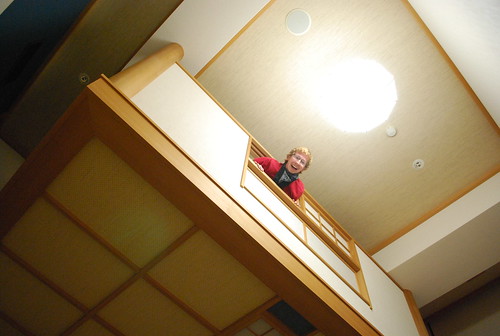
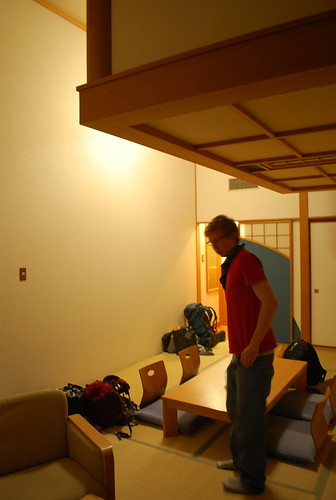
Seriously. The more I think about it, the more I realize that for all our epic plans, we went into this adventure flying by the seat of our pants, and fate or destiny or luck took pretty good care of us. The realization first donned on me as Mark and I lay on cool asphalt in the shadow of trees at our campsite on Rishiri, in our post-onsen state, looking up to the wide spread of stars and talking about the women we’d loved and lost along the way. At that moment the trip was perfect, and as a thanks to whatever clever little Fox God was looking out for us I poured out some of my beer onto the mountain—a toast to our guardian Kami.
Sorry. That’s all rather broken up in terms of an epic chronicling of our road trip adventure, but doing something more coherent seemed forced.
If you’re looking for something like that, though, I did a pretty good job in the captions of the pictures I uploaded along the way to my Japan as it Happens Flickr set. Also, I’ve now uploaded my proper photos to Flickr, and they’re the ones I’ve sampled in this post. More can be found in Points South (Hakodate to Sapporo) and Points North (up to Wakkanai, Rishiri, Cape Soya, and Tomamae).
Next, we'll have to make a trip out to Shiretoko to see the far east of our island, but I don't think that will be for a while yet.
Subscribe to:
Posts (Atom)